
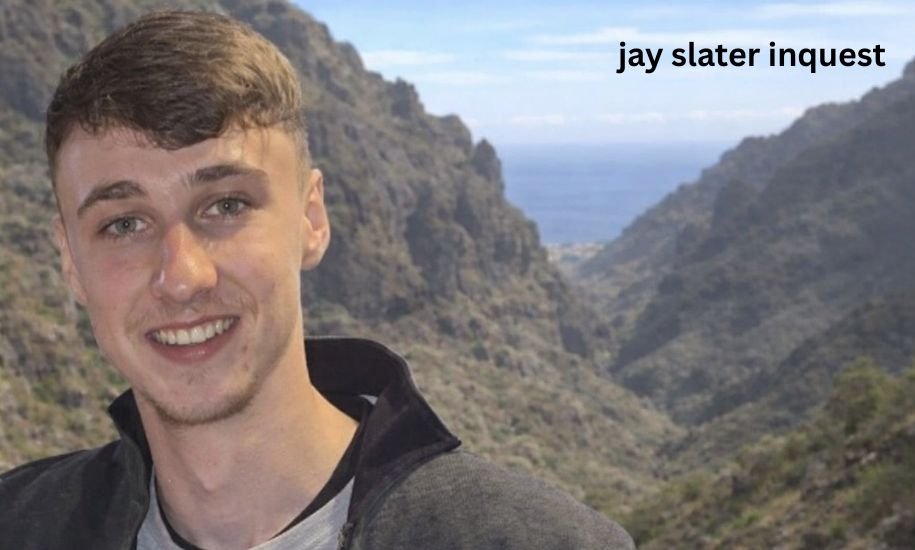
The jay slater inquest brought long-awaited clarity to one of the most talked-about and emotionally charged cases involving a young British tourist abroad. For weeks, Jay Slater’s disappearance in Tenerife dominated headlines, social media discussions, and public concern across the UK. When his body was eventually found, questions only intensified: What really happened? Was anyone else involved? Could the tragedy have been prevented?
This article provides a detailed, human-centred look at the jay slater inquest, covering who Jay Slater was, the events leading up to his death, the inquest date, the evidence examined, and the final inquest results. Written with care and accuracy, it aims to explain the facts while respecting the gravity of the case.
Who Is Jay Slater?
Before becoming the focus of a national inquest, Jay Slater was simply a 19-year-old young man from Lancashire with his whole life ahead of him. Friends and family described him as outgoing, energetic, and excited about travelling. Like many teenagers his age, Jay enjoyed music, socialising, and holidays with friends.
In June 2024, Jay travelled to Tenerife, one of Spain’s most popular holiday destinations for young British tourists. What was meant to be a fun summer trip tragically turned into a nightmare when he failed to return to his accommodation after a night out. His sudden disappearance sparked a massive search operation and intense media coverage both in the UK and abroad.
Understanding who Jay Slater was as a person is essential to understanding why the jay slater inquest resonated so deeply with the public. He was not a celebrity or public figure—he was a teenager whose death raised broader questions about safety, decision-making, and vulnerability while travelling.
Events Leading Up to Jay Slater’s Disappearance
According to evidence later discussed during the jay slater inquest, Jay spent the evening socialising at a music event and nightclub with friends. In the early hours of the morning, he left with people he had recently met and travelled to a rural area in the mountains of Tenerife.
The following morning, Jay contacted friends via phone and video calls. He appeared disoriented and explained that he was in a remote location, low on battery, and without water. He planned to walk back to his accommodation—a journey that, in reality, would have taken many hours on foot through extremely challenging terrain.
After that call, contact was lost. His phone battery died, and he did not return. What followed was an extensive search involving local authorities, mountain rescue teams, drones, and volunteers. The scale of the operation reflected both the difficult landscape and the growing concern for Jay’s safety.
Discovery and Aftermath
Weeks later, Jay Slater’s body was discovered in a steep ravine in a mountainous area of Tenerife. The location was remote, rugged, and dangerous, making access extremely difficult even for trained rescue teams.
The discovery brought devastating news to Jay’s family and friends. It also marked the beginning of a new phase—understanding exactly how and why he died. That responsibility ultimately fell to the coroner through the jay slater inquest, a formal legal process designed to establish the facts surrounding a death.
Jay Slater Inquest Date and Legal Proceedings
The jay slater inquest date was set for July 2025, with hearings held at a UK coroner’s court. The delay between Jay’s death and the inquest was due to the complexity of the case, the need to gather evidence from Spain, and the challenge of locating and hearing from witnesses.
During the inquest, the coroner examined:
- Post-mortem findings
- Toxicology results
- Witness statements
- Phone records and timelines
- Expert testimony on terrain and injuries
The purpose was not to assign criminal blame but to establish how Jay Slater died, when it happened, and under what circumstances.
Jay Slater Inquest Results: What the Coroner Concluded
The Jay Slater inquest results concluded that Jay died as a result of an accidental fall from a height. The coroner found that he suffered catastrophic head injuries consistent with falling in steep, uneven terrain. These injuries were described as unsurvivable and likely caused instant death.
Crucially, the inquest found:
- No evidence of third-party involvement
- No signs of assault or restraint
- No indication that Jay was forced or threatened
The ruling was one of accidental death, bringing an official end to speculation about foul play.
Role of Alcohol and Substances
One of the most sensitive aspects of the jay slater inquest involved toxicology findings. Evidence presented showed that Jay had consumed alcohol and drugs earlier in the night. The coroner emphasised that this information was included to provide context, not to place blame.
It was acknowledged that impairment could have affected Jay’s judgment, awareness, and ability to navigate safely—particularly in unfamiliar, hazardous terrain. However, the inquest made clear that substance use did not change the fundamental conclusion: Jay’s death was a tragic accident.
Terrain, Conditions, and Risk Factors
Expert testimony highlighted how dangerous the area where Jay was found truly was. The terrain included:
- Narrow paths
- Loose rocks
- Steep drops
- Limited signage
- Extreme heat during daytime hours
The coroner noted that even experienced hikers could struggle in such conditions. For someone alone, unfamiliar with the area, and possibly dehydrated, the risks were significantly higher.
These findings formed a critical part of the jay slater inquest, reinforcing the conclusion that the environment itself played a major role in the tragedy.
Public Reaction and Media Attention
The case attracted unprecedented online attention. Social media speculation, conspiracy theories, and misinformation circulated widely during the search and even after the inquest results were announced.
The coroner addressed this indirectly by stressing that the court’s findings were based solely on evidence, not rumours. Jay’s family also spoke about the emotional toll caused by online commentary, highlighting the human cost behind public fascination.
The jay slater inquest ultimately helped cut through the noise, replacing speculation with verified facts.
Lessons Highlighted by the Jay Slater Inquest
Beyond the legal outcome, the jay slater inquest raised important broader issues:
- The risks of travelling alone in unfamiliar areas
- The dangers of mountainous terrain without preparation
- How quickly situations can escalate when communication is lost
- The impact of impairment on decision-making
While no inquest can undo a loss, many saw this case as a sobering reminder for young travellers and holidaymakers to prioritise safety and awareness.
Family Closure and Moving Forward
For Jay Slater’s family, the inquest marked a painful but necessary step toward closure. While nothing can ease the loss of a child, the clear findings helped answer the questions that had haunted them since his disappearance.
The conclusion of the jay slater inquest allowed them to grieve without the burden of unanswered doubts, rumours, or ongoing investigations.
Final Thoughts on the Jay Slater Inquest
The jay slater inquest was not just a legal proceeding—it was a public reckoning with tragedy, risk, and the vulnerability of youth. It confirmed that Jay Slater’s death was a heartbreaking accident, shaped by environment, circumstance, and a series of small decisions that led to devastating consequences.
As cases like this fade from headlines, their lessons should not. Awareness, preparation, and caution can save lives—especially when travelling abroad.
At Info Craze, we believe in presenting facts with compassion and clarity. The story of Jay Slater is not one of scandal, but of loss—and remembering that distinction matters.
