
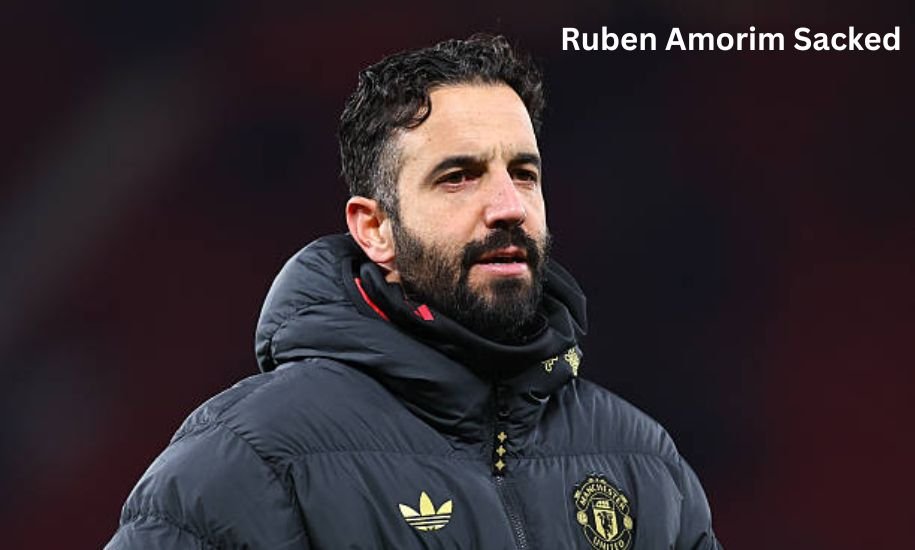
The football world was rocked when the headline “ruben amorim sacked” began trending across news platforms and social media. For a manager once praised as one of Europe’s brightest tactical minds, the sudden end to his Manchester United journey felt dramatic, divisive, and deeply symbolic of the club’s ongoing instability. Amorim arrived with a reputation for modern football, fearless ideas, and long-term vision. Yet, in the unforgiving environment of elite football, promise alone is never enough.
This article takes a deep dive into why Ruben Amorim was sacked, what went wrong during his tenure, Ruben Amorim’s next job prospects, and the all-important question: who will replace Ruben Amorim at Manchester United. Beyond the headlines, this story reflects broader truths about pressure, patience, and power in modern football.
The rise and fall of Ruben Amorim at Manchester United
Before the words ruben amorim sacked dominated search engines, his appointment was seen as a bold statement of intent. United turned to the Portuguese coach after his impressive work in Portugal, where he earned plaudits for tactical discipline, youth development, and fearless attacking football.
From day one, Amorim attempted to reshape United’s identity. He introduced a structured pressing system, preferred a back-three formation, and pushed for collective responsibility rather than star-dependent football. Early signs were mixed. There were flashes of intelligent buildup play and improved defensive shape, but consistency never truly arrived.
As weeks turned into months, results failed to match expectations. For a club of Manchester United’s stature, mid-table struggles and lack of progress in key competitions quickly raised alarm bells. The narrative began to shift from “long-term project” to “short-term failure.”
Why ruben amorim sacked became inevitable
The decision that led to ruben amorim sacked was not triggered by a single match or moment. Instead, it was the culmination of several interlinked issues that steadily eroded confidence in his leadership.
Poor results and league position
In elite football, results are the ultimate currency. Despite occasional strong performances, United’s league form remained inconsistent. Dropped points against lower-ranked teams, defensive lapses in crucial moments, and an inability to control big matches all contributed to mounting pressure.
A club accustomed to Champions League ambitions found itself drifting dangerously far from the top. Statistics painted a worrying picture: low win percentage, negative goal difference at key stages, and one of the weakest starts in recent seasons. For the board, patience was wearing thin.
Tactical rigidity and adaptation issues
Amorim’s tactical identity, while admired in theory, became a double-edged sword. His insistence on a specific system often clashed with the existing squad profile. Some players struggled to adapt, while others appeared uncomfortable in unfamiliar roles.
Critics argued that Amorim failed to show flexibility when things went wrong. In the Premier League, where opponents adapt quickly, tactical stubbornness can be fatal. This narrative gained momentum as United repeatedly lost similar types of matches.
Dressing room and boardroom tensions
Behind the scenes, reports suggested growing tension between Amorim and senior figures at the club. Disagreements over transfers, recruitment strategy, and internal authority reportedly strained relationships.
A particularly candid press conference, where Amorim openly questioned support structures and decision-making, was seen by many as a turning point. Public frustration rarely goes down well at a club already under scrutiny. From that moment, the feeling that ruben amorim sacked was only a matter of time became hard to ignore.
Fan and media reaction to ruben amorim sacked
The reaction to ruben amorim sacked was deeply divided. Some fans believed the decision was inevitable, arguing that performances showed little sign of improvement. Others felt Amorim had been made a scapegoat for deeper, structural problems at the club.
Pundits echoed this split. While some highlighted his tactical inflexibility and poor results, others questioned whether any manager could truly succeed in an environment marked by constant change and unrealistic expectations.
Social media reflected the chaos. Hashtags trended, debates raged, and once again, Manchester United found itself at the center of a global football conversation — not for success, but for instability.
Ruben Amorim next job: where could he go?
One of the most intriguing questions following ruben amorim sacked is about his future. Despite his dismissal, Amorim’s reputation has not been destroyed. In fact, many within football still view him as a high-quality coach whose philosophy simply clashed with his environment.
A return to European football
A return to a top European league seems likely. Clubs in Spain, Italy, and Germany value structured systems and long-term planning — areas where Amorim thrives. A mid-table club looking to build sustainably could be a perfect fit.
International management
Another possibility is international football. Amorim’s clear tactical ideas and ability to work within defined structures may suit a national team setup, where training time is limited but clarity is essential.
A reset in Portugal
A homecoming cannot be ruled out. Portuguese clubs remain keenly aware of his abilities, and a return could allow him to rebuild confidence away from relentless Premier League scrutiny.
Whatever his next move, Ruben Amorim next job will be closely watched. Many believe he will learn from this experience and return stronger, wiser, and more adaptable.
Who will replace Ruben Amorim at Manchester United?
The question of who will replace Ruben Amorim is arguably even more complex. United now face a familiar crossroads: continue chasing quick fixes or commit to a coherent long-term plan.
Interim solutions and internal options
In the short term, an interim appointment offers stability. Someone who understands the club’s culture and can steady results may be preferred while the board evaluates long-term candidates.
Proven elite managers
There is also pressure to appoint a high-profile, proven manager — someone with a track record of winning trophies and handling big personalities. This approach may appease fans, but history suggests it comes with risks.
Another project manager?
Alternatively, United could double down on the “project” model, appointing another progressive coach aligned with modern football principles. If so, lessons from ruben amorim sacked must be learned — especially regarding squad fit and institutional support.
What ruben amorim sacked says about modern football
Beyond one club or one coach, the saga of ruben amorim sacked highlights a wider truth. Modern football offers little room for experimentation at elite clubs. Vision and philosophy are celebrated — until results dip. Then, patience disappears.
Managers are expected to rebuild squads, implement new ideas, win immediately, and manage egos — all at once. Amorim’s story is not unique; it is part of a growing pattern where long-term projects rarely survive short-term pressure.
Final thoughts: lessons from ruben amorim sacked
The story of ruben amorim sacked is not simply about failure. It is about mismatch — between vision and reality, philosophy and patience, expectation and execution. Amorim will move on, likely wiser and better prepared for his next challenge. Manchester United, meanwhile, face another reset.
As fans and analysts debate what comes next, one thing is clear: without structural clarity and genuine long-term commitment, no manager — no matter how talented — can truly thrive.
At Info Craze, we believe stories like this deserve depth beyond headlines. The sacking of Ruben Amorim is a reminder that football success is built not only on tactics and talent, but on alignment, trust, and time. Until those elements come together, the cycle may continue.
